Mentorship Programs: Developing Talent and Strengthening Teams
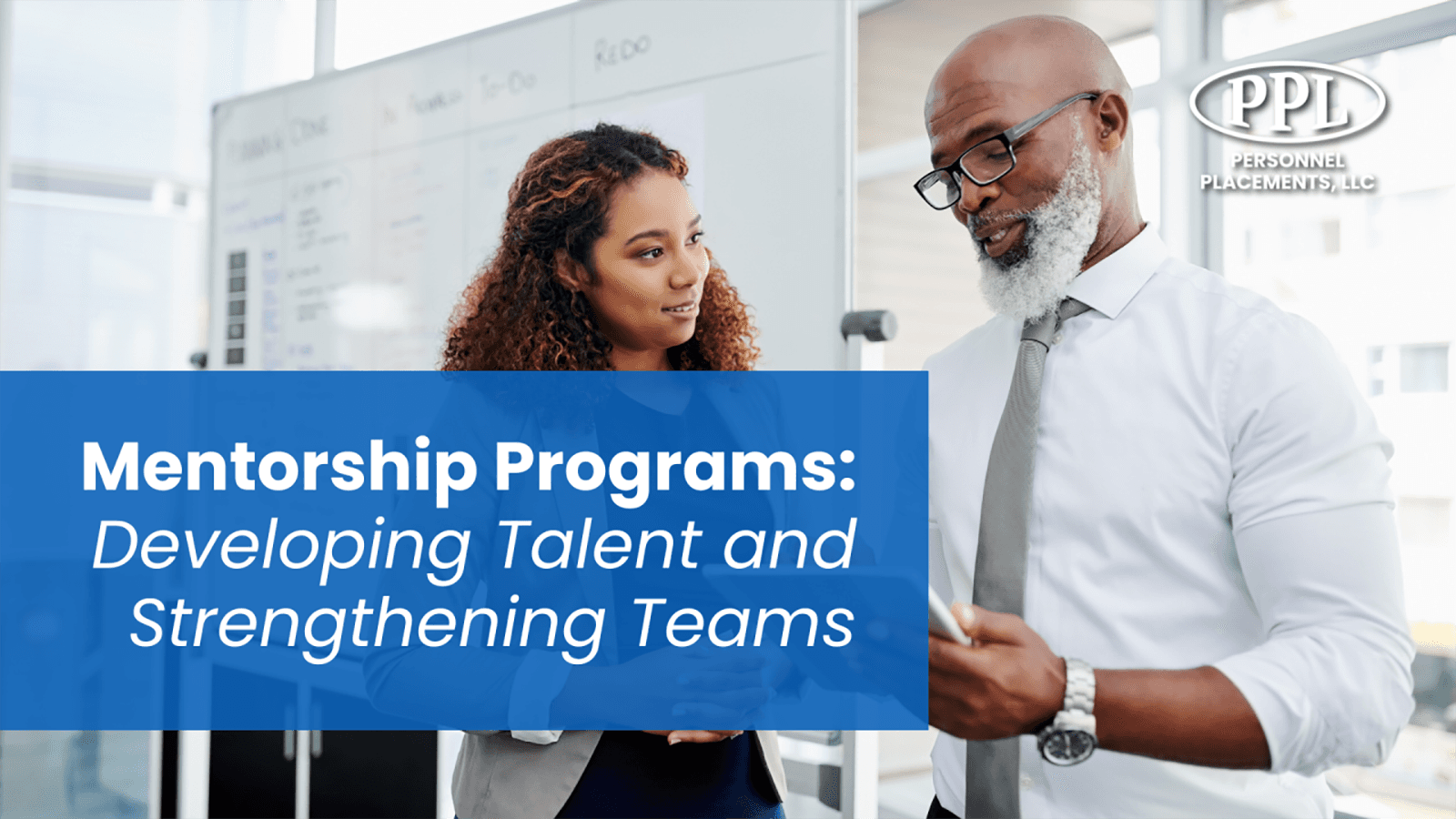
Mentorship programs are a powerful tool for developing talent, improving retention, and strengthening workplace culture. By connecting experienced employees with newer or less experienced staff, employers can transfer knowledge, build skills, and foster collaboration across teams.
Why Mentorship Matters
Employees want to grow professionally, and mentorship programs provide guidance, feedback, and insight that can accelerate development. For employers, structured mentorship:
- Builds internal talent pipelines
- Increases engagement and satisfaction
- Reduces turnover by fostering strong workplace relationships
- Strengthens company culture through knowledge-sharing
Mentorship also prepares employees for leadership roles, creating a natural pathway for succession planning and long-term stability.
Designing an Effective Mentorship Program
A successful mentorship program requires planning, structure, and commitment:
- Define goals and objectives. Determine what the program should achieve — whether it’s skill development, career guidance, leadership preparation, or cross-departmental knowledge-sharing. Clear goals help measure success.
- Match mentors and mentees thoughtfully. Pair participants based on skills, career goals, and personality fit. Good matches foster meaningful relationships that benefit both parties.
- Provide guidelines and support. Mentors and mentees need clear expectations, including meeting frequency, communication methods, and desired outcomes. Support may include training for mentors on coaching and feedback techniques.
- Encourage regular interaction. Consistency is key. Scheduled check-ins and ongoing communication ensure the relationship remains productive and goal-oriented.
- Evaluate and adjust. Collect feedback from participants to refine the program. Measuring progress against defined goals helps maintain relevance and effectiveness.
Benefits for Employees and Employers
Mentorship programs deliver multiple advantages:
- Employee development: Mentees gain knowledge, skills, and confidence, accelerating their contribution to the organization.
- Leadership preparation: Mentors develop coaching and leadership abilities, preparing them for future roles.
- Engagement and retention: Employees feel valued when employers invest in their growth, reducing turnover.
- Knowledge transfer: Institutional knowledge is preserved and shared, ensuring continuity even when employees leave.
Building a Culture of Growth
Mentorship programs also signal a commitment to learning and development, reinforcing a culture where continuous improvement is valued. Employees see that leadership invests in their careers, creating a stronger connection to the organization.
The Employer Advantage
Employers who implement structured mentorship programs benefit from stronger talent pipelines, higher engagement, and improved retention. Knowledge-sharing reduces gaps in skills and performance, while employees feel supported and motivated to achieve their potential.
The bottom line: Mentorship programs are a win-win for employees and employers. By facilitating meaningful relationships and fostering development, organizations build stronger teams, prepare future leaders, and create a culture that attracts and retains top talent.


